- December 28, 2025
- 0 Comments
- By Admin
As someone who began in architecture, grew through UX design, and sharpened my eye in video post-production, today’s release of Nano Banana Pro strikes me as profound.
We are not merely seeing higher resolution or faster speeds. We are seeing the emergence of genuine visual reasoning.
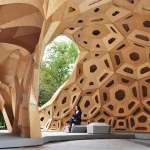
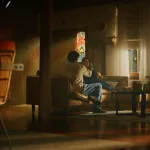
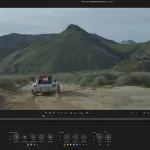
For years, the gap between a designer’s vision and the final production has been filled with friction. Nano Banana Pro begins to close that gap. It mirrors the way creative professionals think by accounting for materiality, spatial logic, and narrative flow. For an architect, it means rapid prototyping of spatial concepts. For a UX lead, it means turning hand-drawn sketches into expressive UI artifacts instantly. For a colorist, it means a partner who actually understands lighting composition and emotional tone.
From a Human Factors perspective, this is a massive leap in cognitive support. The model merges reasoning with creative fidelity to produce legible typography and grounded infographics. It doesn’t just make things look good; it seems to grasp why they need to look that way.
And in an era marked by concerns about authenticity, Google’s SynthID watermarking framework is more than a technical feature. It is a design philosophy. Transparency becomes part of the creative workflow, not an afterthought. As a Human Factors Researcher, I see this as an ethical infrastructure for the next generation of visual tools. It forms the foundations we need if AI-driven creativity is to remain trustworthy, fair, and responsible at scale.
Nano Banana Pro does not replace the creator. It expands the surface area of what we can imagine. It allows students, researchers, and professionals to move faster without losing intention.
Design tools are evolving from command-based executors to context-aware partners. I am curious to hear from my network: What surprised you the most about how this model handled your specific creative workflow?